Today we are going to explore a common use case for how CiviCRM contacts can integrate with Drupal users using the CiviCRM Entity module. Managing contacts can be a daunting task for organizations, including many of our clients here at Skvare. With needs that include membership subscriptions, group emails, accepting donations, relationships to other contacts and organizations, and more - thankfully, CiviCRM answers each of these in a straightforward and user-friendly way. And by pairing with Drupal we enable custom user profiles, and any combination of contact-content referencing, while making ...
Drupal Planet
Drupal Planet
Created per https://www.drupal.org/drupalorg/docs/content/planet-drupal
You must have an RSS feed that contains only content appropriate for Drupal Planet. If your site uses Drupal, you can create a "Drupal Planet" taxonomy term and use it to tag any content you want to appear on the Planet. Drupal automatically creates an RSS feed for each taxonomy term, and you can submit that term’s feed URL in your Drupal Planet application. Alternatively, you can use the Drupal Planet feature module, which uses Flag and Views modules to create the feed. If you are not using Drupal, you will need to make sure your site can create a feed just for your Planet content.
We are excited to announce a new blog and webinar series on the CiviCRM Entity module, demonstrating practical applications of CiviCRM integration with Drupal. Proudly presented and hosted by Skvare, we will cover an initial 8 topics - highlighting key features and use cases of this powerful tool. We’ve included the first five topics below, and will update with additional topics soon: (May 25) - CiviCRM Contacts in Drupal 8 (June 1) - Interactive Maps with CiviCRM Addresses (June 8) - Contributions and Reports within Views (June 15) - Customizing ...
Using the CiviCRM Entity Module
What is the CiviCRM Entity Module?
Integrating the world’s largest open-source Client Relationship Management tool, dedicated to supporting membership associations and non-profit organizations (CiviCRM), with the latest versions of the popular Drupal Content Management System (Drupal 8 and Drupal 9) - the CiviCRM Enitity module allows for incredible expanded functionality by exposing CiviCRM API entities as true Drupal entity types.
This allows users to:
Sync roles and contact types during user creation
Register users and collect contributions using powerful webforms
Reference any Civi data on nodes and other Drupal entities
Create event and other contact type pages using the new core media entity system, slideshows, and other Drupal fields
Generate reports and charts using Civi data within views displays
Create maps and proximity filters using Civi addresses
A few more details please...
CiviCRM focuses on contact and relationship management as its core function, and is 100% open source benefitting from a large and vibrant community of contributors. The power of the CiviCRM Entity module is the extendability it provides by interconnecting features of CiviCRM and Drupal to create unlimited synergistic functionality.
By exposing CiviCRM API entities as true Drupal entity types, any Drupal feature or module can access, manipulate, and display CiviCRM contact data as if it were a native Drupal entity. This opens the doors of hundreds contributed modules to be used with CiviCRM data to build custom solutions.

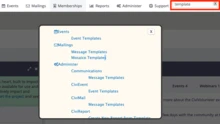
CiviCRM is a great open-source customer relationship management (CRM) system that integrates with your Drupal, Wordpress, or Joomla content management system (CMS). CiviCRM has a number of diverse features ranging from contact management, membership management, event registration, and bulk emails. The only problem is that it can be somewhat difficult to remember where to find the settings that you are looking for. Behold the Quick Search CiviCRM Menu extension. If you are a CiviCRM admin, then you know that there are several nested menu items in the Administer parent menu ...
CiviCRM Entity Reference Field is a submodule of the CiviCRM Entity project, which tightly integrates CiviCRM data into Drupal by exposing API entities as Drupal entity types. One of the many advantages of installing the CiviCRM Entity module is the ability to use Drupal’s Entity Reference module to reference CiviCRM data from nodes, terms, or other entity types. Many people are using the Inline Entity Form module, which provides field widgets that allow creating, editing, or deleting referenced entity from the parent form. If you reference CiviCRM contacts via an ...